
Practice · Yodacom Research

Applied AI.

Built in the open, with 40 years of practitioner depth at the intersection of quantitative finance and emerging technology.

I wrote my first neural network in 1988 — on a 286, in a commodity pool office, trying to find signal in futures data. Since then I've shipped production systems across every wave: expert systems, MPT-based risk engines at Ramcap, managed-futures models at Navigator Fund (twice noted in the Wall Street Journal), curriculum at the College for Financial Planning, and now fuzzy-logic + ML hybrid systems for crypto grid trading. Same thread through all of it: quantitative finance meets whatever compute just became possible.

2026 is not a pivot. It's the year the compute finally caught up to ideas I've been tracking since the Reagan administration.

Practice

What I build.

  • Fuzzy inference systems

    Mamdani and Sugeno architectures for decision support where the output has to be explainable to a compliance officer, not just accurate.

  • Hybrid ML + rule-based architectures

    Fuzzy rules encode the expert's intuition; machine learning tunes the membership functions from data. Neither pure black-box nor pure hand-coded.

  • Neural networks and statistical models

    Regime detection, signal extraction, and portfolio-scale backtesting.

  • Explainable-AI pipelines

    For regulated contexts — fiduciary, EU AI Act, SEC-examinable. The output includes a defensible English rationale, not just a number.

  • Decision-support tools for advisors

    Software that sits next to a human, not software that replaces one. Fuzzy outputs in plain English, sized to the firm's risk budget.

  • Research-grade backtests and simulations

    Reproducible, peer-reviewable, with the code and the data paths documented.

In production & in build

Where it shows up.

CoinRoc — live product

Fuzzy-logic risk throttling in production.

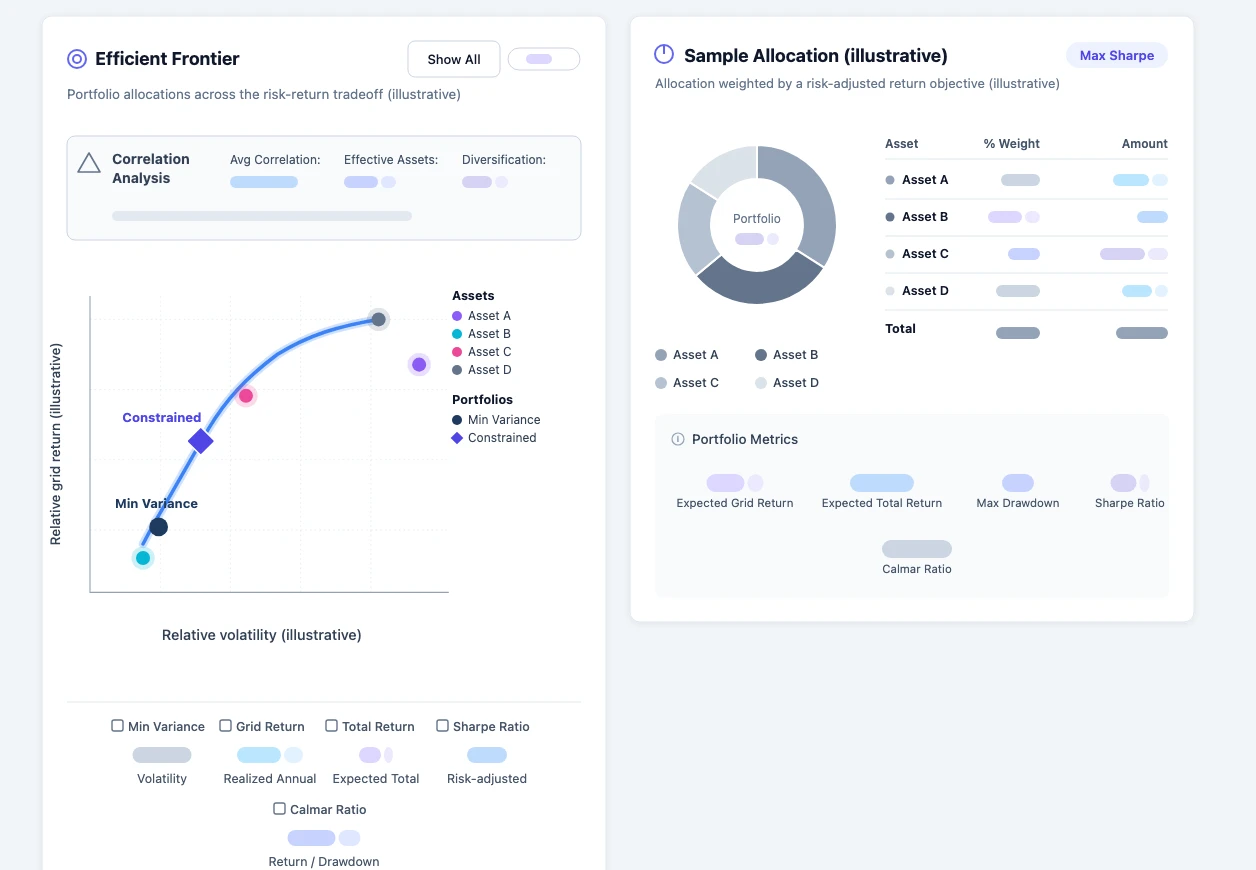
A crypto grid-trading analysis app running fuzzy-logic risk throttling in production. Not a research demo. Live users, live capital, live compute. The fuzzy engine tunes position sizing based on volatility and drawdown regime — and every decision logs an English-language rationale.
Yodacom Research — peer-reviewable papers

Methodology published, not marketed.

The umbrella research house publishes methodology papers on fuzzy logic, post-MPT portfolio construction, and hybrid ML architectures. Paper 2 (in progress) documents the fuzzy membership-function design and the reproducibility artifacts behind the CoinRoc production engine.

RIA decision-support tool — in build

Explainable multi-factor workflow for advisors.

A decision-support workflow for registered investment advisors who want a crypto sleeve they can actually explain to a client and a compliance officer. MVP ships in 5–7 weeks. Fuzzy inference outputs map directly to the DOL safe-harbor 6-factor framework — so the advisor's recommendation memo writes itself.

Fit

Who this is for.

  • RIAs and wealth managers

    Who want a crypto or alternatives sleeve their compliance officer can approve, not a black box their clients can't understand.

  • Family offices

    Looking for quantitative infrastructure that's built by a practitioner who's run money, not by a bootcamp grad who's read about it.

  • Fintechs and wealthtech firms

    Who need applied AI capacity — fuzzy inference, hybrid models, explainability layers — without hiring a ten-person research team.

  • CIOs at legacy financial firms

    Evaluating AI strategy who are tired of deck-driven consultants and want someone who ships code.

If any of this resonates

A conversation, not a pitch.

If you're building in one of those lanes and you want a conversation with a practitioner — not a pitch, not a deck, a conversation — reach out. I take on a small number of advisory engagements each year, and I'm selective about fit. The work has to be interesting and the problem has to be real.