About Yodacom

The ideas were right in 1985.
The compute is finally here in 2026.

Yodacom is a research house and product studio built on a single conviction: the most important ideas in finance are the ones whose time has almost — but not quite — arrived. We have spent forty years standing on that edge. We are still standing there.

Jeremy J. Black
Jeremy J. Black
Founder & President · Yodacom LLC
As covered in
Summit Daily News — Yodacom feature
“Jeremy Black, CEO of YodaCom, is always ahead of the next big thing in technology.”
Summit Daily News — October 2013
About the founder

A scout's career, not a resume.

Yodacom's founder, Jeremy J. Black, has spent forty years working at the intersection of artificial intelligence and portfolio theory. Not in theory. In code.

In 1984 he built RAMCAP — Risk Adjusted Multiple Capital Asset Allocation Program — as President of Advanced Investment Software Inc, co-founded with Kenneth Covell. RAMCAP sold worldwide and was acquired in 1987; it remains in use today. It was written in Prolog, the leading AI and fuzzy-logic language of the decade, and it was one of the first Modern Portfolio Theory–driven risk tools built for financial advisors. It was ported to C and later C++ as the market shifted from Apple to Microsoft. Jeremy lectured on MPT across the US, Canada, and New Zealand, taught asset allocation as an adjunct professor at the College for Financial Planning, held a Certified Financial Planner designation (since lapsed), and served as one of the pool managers inside the Hart-Bornhoft Group's Navigator Fund — a pioneering multi-manager commodity pool featured in Wall Street Journal best-performing-funds rankings during the 1989–1990 period.

Then the compute wall hit.

The compute arc

Forty years, told in wall-clock time.

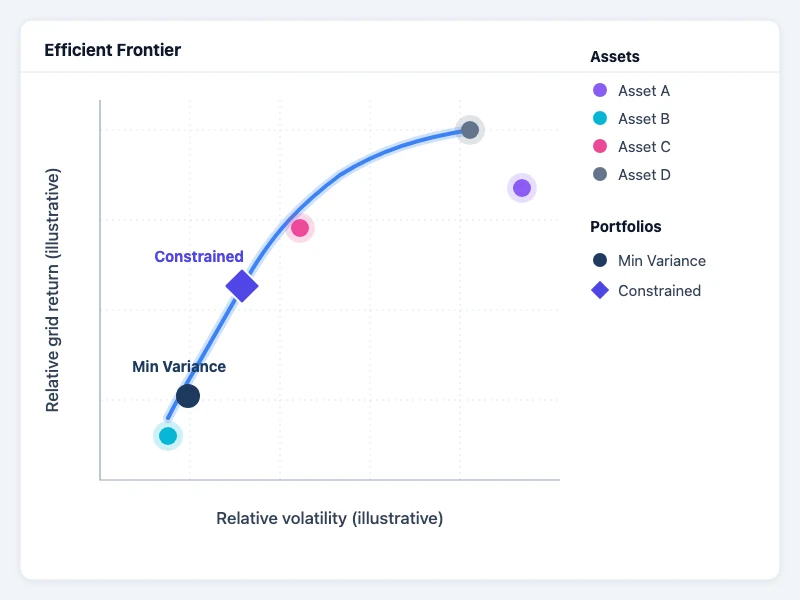
RAMCAP's core job was a correlation matrix across fifteen asset classes using twenty years of data, followed by an efficient-frontier solve. Here is what that math has cost to run, decade by decade.

1985 · Intel 286
1h 8m

15 asset classes · 20 years of data · correlation matrix + efficient-frontier solve

Late 1980s · Intel 386
7 min

200 asset classes · longer dataset · same underlying MPT math

2026 · modern hardware
microseconds

Vastly more data · smarter algorithms · equivalent math, imperceptible latency

That is not an anecdote. That is the Yodacom thesis, told in wall-clock time.

In the late 1980s Jeremy ran early neural-network experiments on econometric time series — three continuous days of training on a souped-up 286, hunting for convergence that never arrived. The nets failed for exactly the reason every neural net of that era failed: the compute wasn't there yet. That firsthand experience of the AI winter — not as an observer, but from inside the work — shapes how Yodacom evaluates every new wave of quantitative promise. We have seen what happens when the math is right and the hardware isn't. We recognize the opposite condition when it arrives.

Always on the frontier.
Sometimes too early.

Forty years on, the pattern is clear. A pre-Google search engine in the 1990s, built and sold before search was a category. A patented sonic device for commercial lobster fisheries — built around a previously unknown acoustic signal lobsters respond to, a discovery the team made in the course of the work itself. Mobile app development before the ecosystem consolidated. Every one of these sits on the same line: right idea, arrived slightly before the world was ready to receive it.

We have reframed that arc. It is not a series of near-misses. It is a scout's career. The whole point of a scout is to return from the frontier with the map. Yodacom's job — and the job of Yodacom Research — is to recognize the moment when the frontier finally becomes the market.

Career arc

From MPT to CoinRoc. Forty years in one thesis.

  1. 1984

    Adjunct Professor · College for Financial Planning

    Taught Modern Portfolio Theory and asset allocation strategies. Lectured on MPT across the US, Canada, and New Zealand. Certified Financial Planner.

  2. 1984

    RAMCAP — The Intelligent Asset Allocator

    Risk Adjusted Multiple Capital Asset Allocation Program — developed and built in 1984 under Advanced Investment Software Inc (co-owned by Jeremy Black and Kenneth Covell; Jeremy served as President). A desktop investment optimizer applying Modern Portfolio Theory across 230+ asset classes — one of the first of its kind for financial advisors, selling worldwide. Written in Prolog, later ported to C and C++. Sold in 1987 — still in use today.

  3. 1988

    Navigator Fund — WSJ-featured

    Operated in and helped form one of Colorado's first multi-manager commodity pools — among the earliest multi-manager hedge funds in the country — featured in The Wall Street Journal's best-performing-funds rankings during the 1989–1990 period.

  4. 1998

    InfoHiway Inc. — acquired by RMI.net

    Left Wilson Associates in 1994 and co-founded InfoHiway — a distributed Perl-powered search engine with 1.3 million visitors by March 1995. Results featured "Fuzzy Relational Links" — a fuzzy-logic approach to query refinement before the terminology existed. In 1997, built AdCafe (a self-serve ad placement tool) and offered every indexed site paid top-5 placement — one of the first complete paid search systems on the web. The backlash from webmasters was fierce. Bill Gross was building the same model at the time; the InfoHiway announcement apparently put Jeremy on his radar, because Gross emailed personally: "have money, interested in buying your company." Jeremy chose RMI.net (Denver) over Idealab (California). GoTo.com launched months later and was credited with inventing paid search. Yahoo later acquired it for $1.63 billion. Acquired by RMI.net in June 1998 for $1.2 million in stock.

  5. 2001

    Aquatic Behaviour Technologies

    Developed tracking technology for a newly patented sonic device his team created for Spiny Lobster. The deeper story: in the course of the work, the team discovered what they came to call the "lobster language" — a previously unknown sonic signal that lobsters reliably respond to. That discovery became the core of the device, combining the embedded sonic signal with RFID tracking for commercial fisheries. A genuine scientific find wrapped inside an entrepreneurial project.

  6. 2010

    VP Digital Innovation · Full Circle

    Served as DMTA (Digital Marketing Technology Architect) and VP of Digital Innovation. Created the Click and Call Network — a digital widget that tracked and managed connections between online shoppers, affiliate marketers, and call centers, routing intent in real time.

  7. 2012

    Founded Yodacom

    Research, development and consulting company pulling on the latest in finance and AI to help launch great products and personalities — serving financial advisors, events, non-profits, and local businesses. 10+ shipped products between 2012 and 2019, accumulating 50,000+ downloads across iPhone and Android.

  8. 2019

    CoinRoc MarketPulse — early experiment

    First CoinRoc prototype: a live crypto price-ticker pulling BTC, ETH, XRP, LTC, EOS, and GNT from CoinMarketCap every 10 seconds. The interest was there. The tooling wasn't yet.

  9. 2023

    CoinRoc — research platform begins

    Conceptual development of the current research platform: grid trading analysis, correlation-based portfolio construction, and regime detection. AI and the data infrastructure had finally caught up.

  10. 2025

    CoinRoc — published

    CoinRoc launched as a full research platform: grid trading scoring, fee-tier disclosure, Efficient Frontier analysis, early-signal discovery, and market regime detection. Built on the same thesis practiced since 1984 — now with the compute to match.

  11. 2026

    Yodacom Research

    Formal research-house positioning. Paper 1 (Gridium) in final review. VetTheTech in development.

Today

What Yodacom does today.

Yodacom LLC is the umbrella. Two products sit under it.

Product · since 2019

CoinRoc →

A rating and analysis platform for crypto grid trading, built for income-disciplined investors, financial advisors, and anyone serious about separating cash-flow strategies from mark-to-market noise. CoinRoc carries forward four decades of correlation discipline and honest cost-and-risk accounting — applied to an asset class that did not exist when that discipline was first written down.

In development · Q3 2026

VetTheTech →

Independent verification of trading-algorithm claims. A former MPT teacher and multi-manager fund operator, supported by a research house of mathematicians and data engineers, auditing the claims that crypto sellers are rarely asked to defend.

Both products publish their underlying research through Yodacom Research, our in-house research arm. Papers are written by a team — mathematical leads own the models, editorial leads own the prose, and a single publisher-editor (Jeremy) signs what ships. It is the conventional structure of a serious research firm. We follow it because the alternative is a lone-voice marketing byline, and the field has too much of that already.

CoinRoc · platform overview
The bet

The same bet, forty years later.

The bet Yodacom is making in 2026 is the same one its founder made in 1985: that ordinary investors and the advisors who serve them deserve tools built on honest math, transparent assumptions, and a stated cost of being wrong. The difference is that the compute finally works. The data finally works. The tooling finally works. The applied AI finally works.

We spent forty years waiting for the other side of the arc to catch up. It has. This is what we build next.

Full biography

Jeremy J. Black

In 1984 Jeremy built RAMCAP (Risk Adjusted Multiple Capital Asset Allocation Program) as President of Advanced Investment Software Inc — a desktop investment optimizer applying Modern Portfolio Theory across 230+ asset classes, one of the first of its kind for financial advisors, selling worldwide before being sold in 1987. He lectured on MPT across the US, Canada, and New Zealand. He was a Certified Financial Planner and an Adjunct Professor at the College for Financial Planning, teaching Modern Portfolio Theory and asset allocation.

He left financial planning to run the Navigator Fund, one of Colorado's first multi-manager commodity pools — among the earliest multi-manager hedge funds in the country — featured in The Wall Street Journal's best-performing-funds rankings during the 1989–1990 period.

In the 1990s and 2000s Jeremy built and sold a pre-Google search engine company, then co-developed a newly patented sonic device for commercial Spiny Lobster fisheries. The project produced an unexpected scientific find: the team discovered what they came to call the “lobster language” — a previously unknown acoustic signal that lobsters reliably respond to. That signal became the core of the device, paired with RFID tracking. He is a busy guy.

He later served as DMTA (Digital Marketing Technology Architect) and VP of Digital Innovation at Full Circle, where he created the Click and Call Network — a digital widget that tracked and managed connections between online shoppers, affiliate marketers, and call centers, routing purchase intent in real time.

He founded Yodacom in 2012 as a research, development and consulting company pulling on the latest in finance and AI to help launch great products and personalities — serving financial advisors, events, non-profits, and local businesses. Working from Silverthorne, Colorado, Jeremy consulted with organizations navigating the mobile revolution as smartphones restructured how businesses reached their customers. Over seven years the studio shipped more than ten public-facing products, accumulating 50,000+ downloads across iPhone and Android. In October 2013, Summit Daily News profiled him in its weekly Profiles column, noting that he “is always ahead of the next big thing in technology.”

CoinRoc began as a simple price-ticker experiment in 2019. The research platform — grid trading analysis, portfolio construction, and regime detection — was conceptually developed from 2023 and published in 2025, when AI and the data infrastructure had finally caught up to the thesis Jeremy has practiced since 1984: that correlation analysis and newer developments to portfolio theory, applied systematically, can identify suitable asset/strategy pairings.

One more thing worth knowing: Jeremy's academic background is in Social Science, Philosophy, and Theology — a Master of Divinity from Denver Theological Seminary and a BS from Northern Arizona University. He arrived at software through ideas, not the other way around. That trajectory shapes how he evaluates technology: with the same skepticism a philosopher brings to a strong-but-convenient argument, and the same curiosity a theologian brings to something genuinely inexplicable. It makes for an unusual quantitative researcher. Probably the right kind.

Past projects

Yodacom Studio · 2012–2019

A selection of public-facing applications Yodacom designed and built for clients during its studio era — before the research-house pivot. Charities, non-profits, assessment tools, commerce platforms.

Romp To Stomp
Romp To Stomp
Breast cancer charity · event app
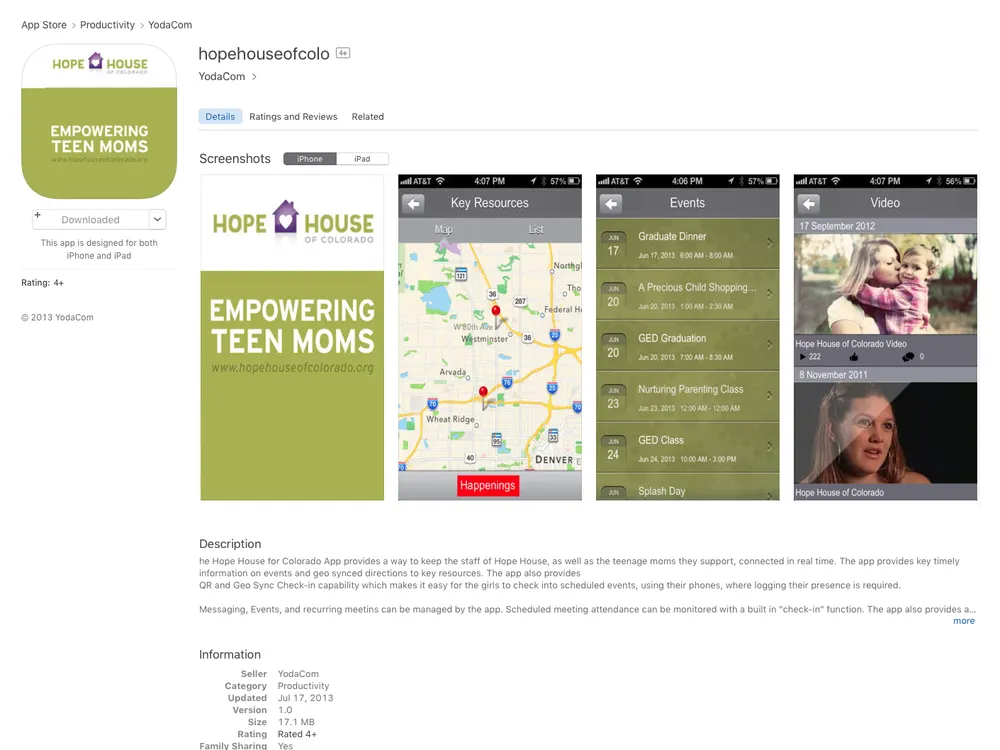
Hope House of Colorado
Non-profit support
Reflexology
Reflexology
Health & wellness
Enneagram Quiz
Enneagram Quiz
Assessment platform
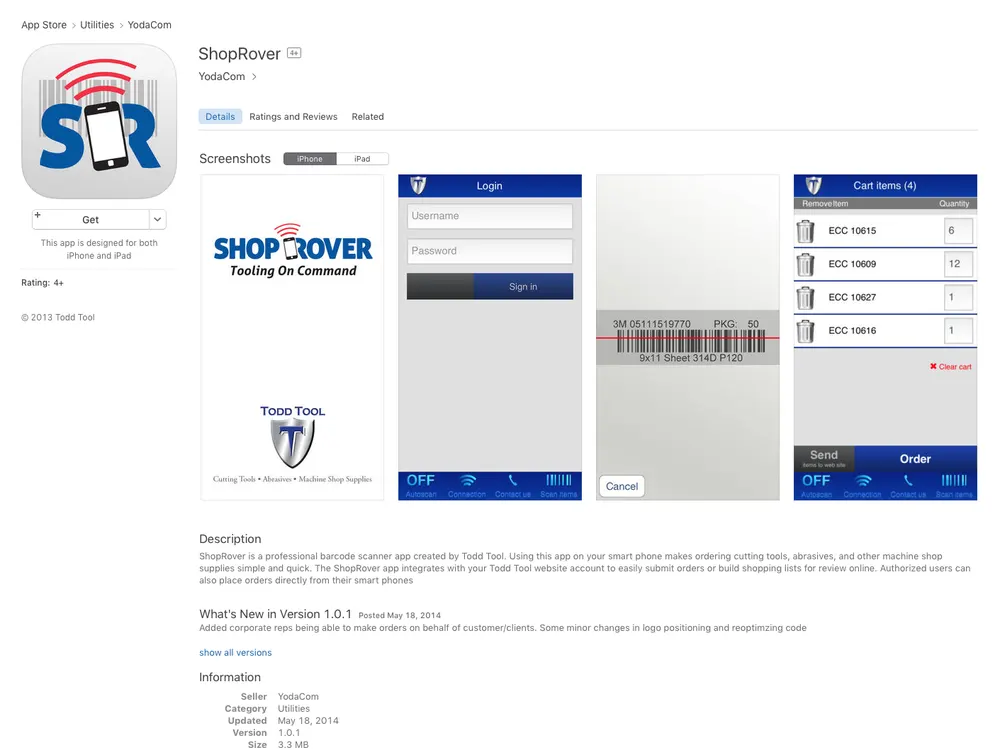
ShopRover
ShopRover
Commerce / discovery
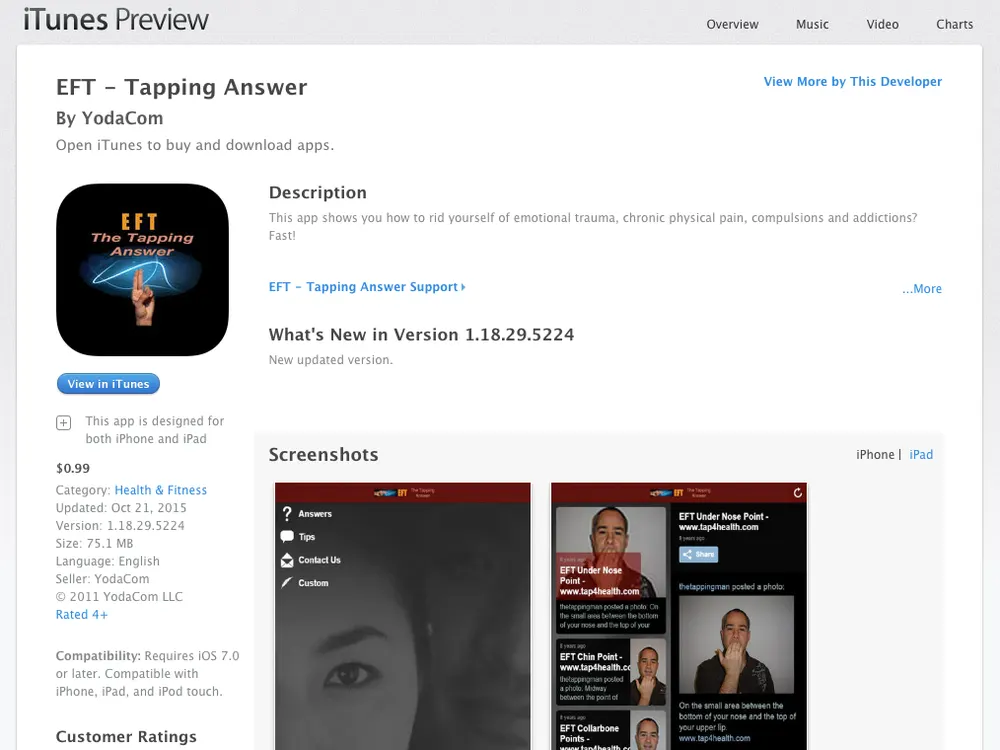
EFT
EFT
Emotional wellness
Yodacom web work collage
Contact

Research inquiries welcome.

Research inquiries, partnership conversations, and press mentions welcome. Correspondence by post or email.

Mail
PO Box 23978 · Silverthorne, CO 80498 · USA

Note: historical credentials cited above (Navigator Fund WSJ appearance, Ramcap, College for Financial Planning adjunct role) are in the process of being sourced for public citation in upcoming research publications. Original archival references will be published alongside the first Yodacom Research paper.